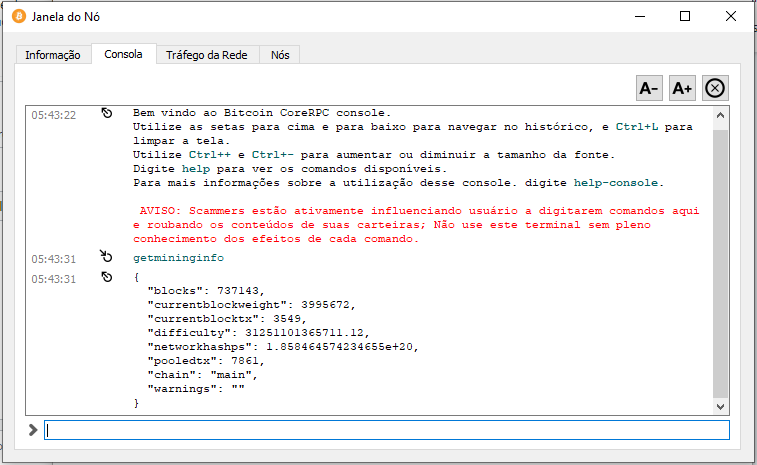
Bitcoin core wallet Is a full node wallet for self-verifying Bitcoin

Bitcoin core wallet Is the wallet function built into Bitcoin Core, a desktop full node that downloads and verifies the Bitcoin blockchain so you can check your own balances and transactions without relying on a third-party server. It is best for users who value self-verification, privacy, and network participation, but it requires disk space, patience during initial sync, careful backups, and a basic understanding of wallet security.

Bitcoin core wallet is not just another app for sending and receiving coins. It sits inside software that validates blocks, enforces Bitcoin consensus rules, relays transactions, and keeps its own view of the chain. That distinction matters because many lightweight wallets ask outside servers what happened on-chain. Bitcoin core wallet instead asks your own node, which changes the trust model from outsourced verification to local verification.

What is Bitcoin core wallet?

Bitcoin core wallet is the wallet component of Bitcoin Core, the open-source software widely used to run a Bitcoin full node. A full node checks the blockchain from the rules outward: proof of work, block structure, transaction validity, signatures, supply limits, and chain history. The wallet layer then uses that verified data to track addresses, unspent transaction outputs, confirmations, balances, labels, and outgoing payments.

Bitcoin core wallet is often described as a desktop wallet, but that label is incomplete. A normal desktop wallet may depend on a remote backend, while Bitcoin core wallet uses the node on the same machine or a node you control. In practical terms, the application can be a wallet, a node, a command-line service, or a backend for other tools, depending on how you configure it.

Bitcoin core wallet is designed for Bitcoin only. It does not try to manage every asset, token, or chain. That narrower scope is a benefit for users who want a focused Bitcoin environment, but it also means that people seeking multi-asset portfolio features usually look elsewhere. The right choice depends on whether verification and control matter more than convenience.

How does Bitcoin core wallet work with a full node?

Bitcoin core wallet works by connecting wallet records to a locally validated copy of the Bitcoin blockchain. During the initial block download, Bitcoin Core fetches historical blocks from peers and checks them. Only after the node has enough verified history can the wallet present a useful, current picture of received transactions and spendable coins. This first sync can take a long time on older hardware or slow storage.

The protocol does not require users to trust one company for balances. Bitcoin core wallet benefits from that design because it sees transactions through your node's mempool and blockchain data. When a payment arrives, the wallet can show whether it is unconfirmed, how many confirmations it has, and whether it appears in the chain your node considers valid.

Bitcoin core wallet can be used through the graphical interface or through command-line and JSON-RPC workflows. The graphical wallet is more approachable for basic receiving, sending, labeling, and fee selection. The command-line interface is useful for automation, watch-only setups, node operators, developers, and anyone who wants precise control over wallet behavior.

Who is Bitcoin core wallet best for?

Bitcoin core wallet is a strong match for users who want to verify Bitcoin directly, run infrastructure at home or on a server, and avoid leaking every address lookup to a public wallet backend. It is also useful for developers, merchants, researchers, and privacy-conscious users who prefer to build workflows around their own node rather than someone else's API.

For a new user, Bitcoin core wallet can feel heavier than a mobile wallet. It needs storage, bandwidth, updates, and operational attention. That does not make it unsuitable, but it means expectations should be realistic. If the goal is quick spending from a phone, Bitcoin core wallet may be less convenient. If the goal is independent verification, it is one of the most direct options.

Bitcoin core wallet can also support other wallet workflows. Some users run Bitcoin Core as their validating node while using a separate interface for day-to-day signing or viewing. A hardware wallet, watch-only wallet, or desktop coordinator may connect to a node so that transaction history comes from a trusted local source instead of a random server.

How to get started with Bitcoin core wallet

Bitcoin core wallet setup starts with obtaining Bitcoin Core from official project sources, checking that the download is authentic, and installing it on a machine with enough disk space and a reliable connection. Users should verify current requirements, release notes, and signatures through official sources because software versions, storage needs, and security recommendations change over time.

Bitcoin core wallet then needs time to sync. The first run downloads and verifies blockchain data before the wallet is fully useful. You can usually choose a data directory, configure network access, and decide whether to use pruning. A pruned node keeps only part of the historical block data after validation, reducing disk use while still verifying the chain for your own wallet activity.

A simple setup flow usually looks like this:

  1. Download Bitcoin Core only from official project channels and verify the release when possible.
  2. Install it on a desktop or server with stable storage, power, and internet access.
  3. Let the node complete initial synchronization before relying on displayed balances.
  4. Create or load a wallet, then make an encrypted backup before receiving meaningful funds.
  5. Send a small test transaction before moving larger amounts.

Bitcoin core wallet should be treated like serious self-custody software. Encryption helps protect the wallet file if the computer is accessed by someone else, but encryption is not a replacement for backups, operating system hygiene, or careful handling of private keys. Losing the only usable backup can mean losing access to funds permanently.

What are the main benefits of Bitcoin core wallet?

Bitcoin core wallet gives users independent transaction verification. That is its central advantage. Instead of asking a third-party service whether a payment happened, your node checks blocks and transactions under Bitcoin's rules. This reduces reliance on external infrastructure and makes your wallet experience closer to the network's base design.

Bitcoin core wallet can improve privacy compared with wallets that query public servers for address history. Privacy is not automatic or perfect: network metadata, address reuse, transaction graph analysis, and careless coin selection can still reveal information. Still, using your own node means your wallet does not need to disclose its addresses to a random backend just to learn its balance.

Bitcoin core wallet also helps users understand fees more concretely. Fee selection is about block space, mempool conditions, transaction size, and urgency. The wallet can estimate fees, allow fee adjustment features where available, and show transaction status. No wallet can guarantee fast confirmation at all times, so users should review fee settings before broadcasting a payment.

Bitcoin core wallet contributes to the Bitcoin ecosystem when the node stays online, validates rules, and connects with peers. Users who allow inbound connections may offer more help to the network than users who only make outbound connections, but even a non-listening node can still independently verify for its owner. The personal benefit and the network benefit are related but not identical.

What risks and safety habits matter most?

Bitcoin core wallet puts responsibility on the user. That is the tradeoff of self-custody. Malware, phishing downloads, weak device security, forgotten passphrases, damaged drives, and missing backups can all create serious losses. Cryptocurrency transactions are generally irreversible, and this page is informational rather than financial, legal, or security advice.

Bitcoin core wallet safety begins before installation. Use official download locations, verify signatures when you can, and be cautious of sponsored search results, lookalike domains, and repackaged installers. Keep the operating system patched, avoid unnecessary browser extensions or remote-access tools on the wallet machine, and consider whether large balances belong in a hardware signing setup rather than on an everyday desktop.

Bitcoin core wallet backups require special attention. A backup should be created after wallet creation and stored securely offline. Depending on wallet type and configuration, users may need to understand descriptor backups, wallet files, labels, and passphrases. Because details can vary by version, always confirm the current backup guidance in official Bitcoin Core documentation before relying on a procedure.

Bitcoin core wallet users should also avoid address reuse where practical, double-check recipient addresses, and test recovery before assuming a backup works. Good self-custody is less about one dramatic security trick and more about boring consistency: authentic software, encrypted storage, redundant backups, clean devices, small tests, and careful transaction review.

Bitcoin core wallet full node desktop setup

Bitcoin core wallet compared with lightweight and hardware wallets

Bitcoin core wallet is different from lightweight wallets because it verifies the chain itself. Lightweight wallets can be easier to install, faster to sync, and better suited for mobile spending, but they often rely on external nodes or servers. That reliance may be acceptable for small daily amounts, yet it is a different security and privacy model.

Bitcoin core wallet is also different from a hardware wallet. A hardware wallet is built to keep private keys on a separate signing device, while Bitcoin Core is full node software with wallet capability. Many experienced users combine both models by using a hardware signer with a wallet interface that connects to their own node. For broader context, a related can help explain why the node layer matters.

Wallet type Main strength Main tradeoff
Bitcoin core wallet Local validation and strong control Needs storage, sync time, and maintenance
Lightweight wallet Fast setup and everyday convenience May rely on outside servers
Hardware wallet Private keys stay on a signing device Often needs another app or node for history

Bitcoin core wallet is not automatically the best answer for every person. A beginner with a small amount may prefer a reputable mobile wallet while learning. A long-term saver may prefer hardware signing. A technically comfortable user may run Bitcoin Core as the foundation for several wallets. The important point is to match the tool to the risk, amount, and workflow.

Can Bitcoin core wallet be used for daily transactions?

Bitcoin core wallet can be used for daily transactions, but it is usually more comfortable on a desktop than on a phone. It works well when the computer is online, synced, and available. If you need to pay from a mobile device at a counter, a lighter wallet may be easier. If you need to verify incoming payments for a business or personal treasury, Bitcoin Core can be much more compelling.

Bitcoin core wallet supports practical routines such as generating receive addresses, labeling payments, reviewing confirmations, choosing transaction fees, and exporting information for records. Users who need more advanced workflows may explore watch-only wallets, partially signed Bitcoin transactions, coin control, or RPC automation. A separate is useful because backup discipline is central to every workflow.

In practice, the wallet works best when it becomes part of a repeatable process. Wait for sync before trusting the displayed state, inspect recipient addresses, consider confirmation depth for larger payments, and keep enough time for fee conditions to change. Bitcoin core wallet provides tools, but the user still has to decide how much urgency, privacy, and operational caution each transaction deserves.

What should you verify before relying on Bitcoin core wallet?

Bitcoin core wallet users should verify the basics before storing meaningful value: the software source, the installed version, the sync status, the wallet encryption state, the backup location, and the recovery process. It is better to discover a mistake with a small test amount than during an urgent transfer. Self-verification should apply to your own setup, not just to the blockchain.

Bitcoin core wallet also requires ongoing attention. Release notes may describe security fixes, wallet changes, fee behavior, or network policy updates. Storage requirements can grow, and hardware that was adequate years ago may become frustrating. Users should check official Bitcoin Core and Bitcoin project documentation for current recommendations before making decisions that affect funds.

Bitcoin core wallet remains valuable because it gives users a direct way to participate in Bitcoin without handing basic verification to someone else. It is not the easiest wallet, and it is not a substitute for careful custody planning. For users who want a full node, a Bitcoin-only wallet, and a deeper understanding of how transactions are verified, Bitcoin core wallet is a practical and durable starting point.

Reader rating: 4.8 / 5 based on 448 ratings

Questions and Answers

Is Bitcoin core wallet the same as Bitcoin Core?

Bitcoin core wallet is the wallet feature inside Bitcoin Core, while Bitcoin Core is the broader full node software. Bitcoin Core validates blocks, connects to peers, relays transactions, and can run with or without wallet functionality. The wallet uses the node's verified blockchain data to track balances and transactions, which is why people often discuss the wallet and node together.

Does Bitcoin core wallet download the entire blockchain?

Bitcoin core wallet normally runs with Bitcoin Core, which validates the blockchain during initial sync. A non-pruned full node stores the full block history, while a pruned node can discard older block data after validation to reduce disk usage. Either way, users should check current official requirements because storage needs, release behavior, and recommended settings can change over time.

Is Bitcoin core wallet safe for storing Bitcoin?

Bitcoin core wallet can be safe when installed from official sources, kept updated, encrypted, backed up, and used on a secure computer. The main risk is user responsibility: malware, fake downloads, lost backups, forgotten passphrases, or mistaken transactions can cause permanent loss. For larger holdings, many users consider combining their own node with a hardware signing device.

How long does Bitcoin core wallet take to sync?

Sync time depends on internet speed, CPU, storage type, memory, and current blockchain size. A modern computer with SSD storage can be much faster than an older laptop with a hard drive, but initial synchronization can still take hours or days. Bitcoin core wallet should not be relied on for current balances until the node is fully synced.

Can I use Bitcoin core wallet without keeping my computer online all the time?

Yes, but Bitcoin core wallet needs to catch up whenever the computer has been offline. If it is not synced, it may not show the latest transactions or confirmations. Keeping the node online more often improves convenience and can help network connectivity, but occasional use is possible as long as you wait for synchronization before transacting.

What is the difference between Bitcoin core wallet and a lightweight wallet?

Bitcoin core wallet verifies transactions using your own Bitcoin Core node, while many lightweight wallets ask external servers or nodes for transaction history. Lightweight wallets are usually faster and easier for mobile use, but they may reveal address queries or depend on third-party infrastructure. Bitcoin core wallet requires more resources but offers stronger self-verification.

Do I need a backup for Bitcoin core wallet?

Yes. A backup is essential because wallet data, descriptors, keys, or passphrases may be needed to recover access. Create backups before receiving meaningful funds, store them offline, and test your recovery plan with small amounts where appropriate. Since wallet formats and recommendations can vary by version, verify backup instructions with official Bitcoin Core documentation.

Search on Youtube!

Bitcoin core

Privacy Policy

Terms of Service

Refund Policy

Bitcoin core

Bitcoin core

Last updated: 13 September 2024
How to compile Bitcoin Core and run the unit and functional tests

This is a summary of the documentation in the Bitcoin Core repository. Don't hesitate to read it for more information.

All steps are to be run from your terminal emulator, i.e. the command line.

Important change starting from September 2024: The master branch of Bitcoin Core has migrated its build system from Autotools to CMake. Bitcoin Core v28, expected to be released in October 2024, will be the last release that uses Autotools as covered by this article. The upcoming v29 release in early 2025 will use CMake for compiling and running tests, and a new version of this article will cover that.

  1. Ensure the dependencies are installed. The following lists include some optional dependencies. Don't hesitate to consult the links below, adapt the dependencies to your needs, and let me know if any are out of date here. Note that ccache isn't strictly required, but you'll probably want to install it (see below). You'll also need a compiler like GCC and/or Clang installed. Refer to doc/dependencies.md for more information.
    • Linux (see doc/build-unix.md for details): sudo apt-get install automake autotools-dev bsdmainutils build-essential ccache clang gcc git libboost-dev libboost-filesystem-dev libboost-system-dev libboost-test-dev libevent-dev libminiupnpc-dev libnatpmp-dev libsqlite3-dev libtool libzmq3-dev pkg-config python3 qtbase5-dev qttools5-dev qttools5-dev-tools qtwayland5 systemtap-sdt-dev
    • macOS (with command line tools and Homebrew already installed, see doc/build-osx.md for details): brew install automake boost ccache git libevent libnatpmp libtool llvm miniupnpc pkg-config python qrencode qt@5 sqlite zeromq
  2. Download the Bitcoin source files by git cloning the repository (after forking it, if you plan to push any changes later on), then cd (change the current directory) to it.
    • git clone https://github.com/bitcoin/bitcoin.git
    • cd bitcoin
  3. Berkeley DB (BDB) is only needed if you want legacy wallet compatibility, i.e. before the current descriptor wallets that use SQLite3. If not, you can skip this step.
    • To install BDB 4.8, a backward-compatible legacy version, run brew install berkeley-db@4 for macOS, and for Linux see the Bitcoin Core build-*.md documentation for your operating system (the legacy install_db4.sh script was removed in Bitcoin Core v25 with PR 26834 ).
    • If you have another version of BDB already installed that you wish to use, simply add --with-incompatible-bdb to your ./configure flags below instead. This option is recommended unless you specifically need BDB 4.8.
  4. Compile from a tagged release branch, unless you wish to test a specific branch or PR.
    • git tag -n | sort -V to see tags and descriptions ordered by most recent last
    • git checkout <TAG> to use a tagged release, for example: git checkout v0.21.0
    • If you want to pull down a PR or specific branch from the remote repository to build and test locally, here is how .
  5. Compile Bitcoin from source.
    • ./autogen.sh
    • ./configure

      or, for legacy wallet support with a recent BDB

      ./configure --with-incompatible-bdb

      or, for legacy wallet support with BDB 4.8

        export BDB_PREFIX='<PATH-TO>/db4'
        ./configure BDB_LIBS="-L${BDB_PREFIX}/lib -ldb_cxx-4.8" BDB_CFLAGS="-I${BDB_PREFIX}/include"

    • make , or if you have multiple CPU cores, which is the usual case nowadays, you can tell make to use all of them and reduce compile time significantly with

      make -j "$(($(nproc) + 1))" on Linux, or

      make -j "$(($(sysctl -n hw.physicalcpu) + 1))" on macOS

  6. Compiling with Clang for Linux users (macOS uses Clang by default).

    To optionally compile with Clang instead of GCC (e.g. for fuzzing, sanitizers, better warnings/errors, or to use less resources), add CC=clang CXX=clang++ to your configure flags:

    ./configure CC=clang CXX=clang++

  7. Pro tips.

    If you're re-compiling frequently (e.g. for testing small changes), as long as you're not changing the build configuration you can skip directly to the make -j <n> step for subsequent builds.

    On the other hand, when you change the build configuration (e.g. for a fuzz build), or you are building a branch containing substantial changes to the autoconf/automake scripts, or when the build isn't working, it's often best to start with a clean slate using make clean or make distclean . Here's a complete example:

    ./autogen.sh && ./configure <flags> && make clean && make -j <n>

    Be sure to use ccache , the fast C/C++ compiler cache, to speed up your builds. It should already be installed as part of the dependencies described at the top of this article. Run man ccache or ccache -h for help.

    You can also gain time by building only what you need. See the Bitcoin Core productivity notes for more.

    You can run ./configure --help to see all the various configuration options. It's a long list, so it may be more practical to search for what you want with grep: ./configure --help | grep -A1 "your-search-term" . The options I use the most often are --with-incompatible-bdb as mentioned above, and --enable-debug for debug builds for reviewing and testing pull requests.

    If you build often, bash aliases may be helpful for abstracting the repetitive details down to short commands.

  8. Fuzz Testing.

    To compile for fuzz testing , build with Clang using the following:

      ./autogen.sh
      ./configure --enable-fuzz --with-sanitizers=address,fuzzer,undefined CC=clang CXX=clang++
      make clean
      make -j <n>

    The steps for fuzz builds with macOS are different (see this link for more details):

      ./autogen.sh
      ./configure --enable-fuzz --with-sanitizers=address,fuzzer,undefined CC=$(brew --prefix llvm)/bin/clang CXX=$(brew --prefix llvm)/bin/clang++
      make clean
      make -j <n>

    You can test running a single fuzzer with, for example: FUZZ=process_message ./src/test/fuzz/fuzz

  9. Sanitizers.

    To compile with sanitizers (credit to Marco Falke for this section), build with Clang using the following:

    • MSan: Compiling with MSan is quite involved. For running tests with MSan, it's probably easiest to just compile normally and then invoke valgrind ./src/test/test_bitcoin or ./test/functional/test_runner.py --valgrind instead. Alternatively, you can use the ./ci/ system to run any sanitizer task.
    • Other sanitizers: Simply append --with-sanitizers=undefined,integer CC=clang CXX=clang++ to your ./configure call (or --with-sanitizers=address, ...). Then, run the tests normally, using the env vars as needed:
        export LSAN_OPTIONS="suppressions=$(pwd)/test/sanitizer_suppressions/lsan"
        export TSAN_OPTIONS="suppressions=$(pwd)/test/sanitizer_suppressions/tsan:halt_on_error=1:second_deadlock_stack=1"
        export UBSAN_OPTIONS="suppressions=$(pwd)/test/sanitizer_suppressions/ubsan:print_stacktrace=1:halt_on_error=1:report_error_type=1"

    See the Sanitizers section of the Bitcoin Core developer notes for more information.

  10. Troubleshooting.

    If you're seeing any odd issues while compiling, try using make clean or make distclean and rebuild from scratch as described above.

    If that doesn't work, or if you are seeing linker issues, the header and compilation might be out of sync and you may want to ensure that you are building from a clean tree. If you are using ccache, try clearing the cache by running ccache -C (see man ccache or ccache -h for help) and then rebuilding.

    If that doesn't solve it, you can also run git clean -f -x -d and rebuild. This wipes everything in the tree that doesn't belong to git, so be careful that you don't have anything else in the directory that you don't want to lose and move it out first.

  11. Run the unit tests.
    • make check , or
    • make -j "$(($(nproc)+1))" check to use multithreading on Linux, or
    • make -j "$(($(sysctl -n hw.physicalcpu)+1))" check to use multithreading on macOS
    • See the Bitcoin Core unit tests documentation for more info.
  12. Run the functional tests. From the repository root:
    • test/functional/test_runner.py to run the standard test suite (try test/functional/test_runner.py -j 60 or a similar high number to run the tests more quickly in parallel)
    • test/functional/ .py to run an individual test file
    • test/functional/test_runner.py --extended to run the extended test suite
    • test/functional/test_runner.py --help to see the various options for running tests
    • See the Bitcoin Core functional tests documentation for more info.

Cheers,

Jon Atack